What We Think About

We think about the systems behind software delivery. Some articles examine common bottlenecks that slow teams down. Others explore recurring behavior patterns that emerge in response to those constraints. Together, they reflect a consistent belief: most delivery problems aren’t people problems — they’re system problems, and they can be addressed by changing the conditions around the work.

Personas Are Traps. Modes Build Software.

Patterns repeat in software teams for a reason. This article explores common behaviors—and why changing the system matters more than labeling the people.
Software teams often adapt around familiar behaviors instead of examining the systems that reinforce them. Over time, personas meant to describe behavior can harden into labels that limit improvement. This article explores common patterns that show up across teams—and introduces a shift from fixed personas to flexible modes that allow people to adapt as conditions change.

Personas Are Traps. Modes Build Software.

Patterns repeat in software teams for a reason. This article explores common behaviors—and why changing the system matters more than labeling the people.

Read about it...

The 5 Most Common SDLC Bottlenecks

Discover the five most common SDLC bottlenecks and how iterative improvements—guided by strong leadership, aligned priorities, and intentional reflection cycles—can transform your delivery flow.
Software delivery rarely slows down because of a single broken step. More often, it’s constrained by a small number of recurring bottlenecks that quietly shape how work flows through the system. This article introduces the five most common SDLC bottlenecks, the risks they create, and how to recognize them in your own delivery process. Rather than jumping straight to fixes, it helps leaders and teams build clarity through iterative improvements, aligned priorities, and intentional reflection cycles — restoring flow and enabling a delivery system that improves with every pass.

The 5 Most Common SDLC Bottlenecks

Discover the five most common SDLC bottlenecks and how iterative improvements—guided by strong leadership, aligned priorities, and intentional reflection cycles—can transform your delivery flow.

Read more...

The Lone Wolf

A pattern that emerges when independence feels more efficient than alignment. Productive in isolation—costly without feedback and reconnection.
The Lone Wolf pattern prioritizes autonomy and personal judgment, often accelerating progress when coordination feels heavy or unproductive. This instinct can be valuable in exploratory or research-focused work. When reinforced without explicit feedback loops, it leads to misalignment, surprise outcomes, and fragmented ownership. This article explores why the Lone Wolf emerges, when independence creates value, and how systems can support discovery without isolation.

The Lone Wolf

A pattern that emerges when independence feels more efficient than alignment. Productive in isolation—costly without feedback and reconnection.

The Artisan

A pattern that emerges when pride in craft meets unclear constraints. Elevating quality—until refinement displaces delivery.
The Artisan pattern emphasizes care, precision, and pride in workmanship. This instinct raises quality and prevents shortcuts that create long-term pain. When reinforced without clear definitions of “enough,” refinement can quietly expand scope and delay meaningful outcomes. This article explores why the Artisan emerges, when craft compounds value, and how systems can support excellence without sacrificing progress.

The Artisan

A pattern that emerges when pride in craft meets unclear constraints. Elevating quality—until refinement displaces delivery.

The Architect

A pattern that emerges when repetition becomes visible and structure feels necessary. Powerful when timed well—costly when introduced too early.
The Architect pattern looks for leverage through abstraction, structure, and reuse. This instinct becomes valuable when repetition is real and likely to persist. When reinforced without evidence or timing constraints, it can introduce complexity faster than value and lock teams into assumptions that haven’t yet stabilized. This article explores why architectural thinking emerges, when it compounds benefits, and how systems can encourage better timing without suppressing foresight.

The Architect

A pattern that emerges when repetition becomes visible and structure feels necessary. Powerful when timed well—costly when introduced too early.

The Validator

A pattern that emerges when direction feels unclear and decisions carry hidden risk. Careful and conscientious—until hesitation becomes the default.
The Validator pattern seeks alignment before action, prioritizing shared understanding and avoidance of rework. This instinct is valuable when priorities, ownership, or intent are unclear. When reinforced without clear decision boundaries, it can slow momentum and turn capable teams into approval bottlenecks. This article explores why the Validator emerges, when it protects teams, and how systems can provide clarity without sacrificing care.

The Validator

A pattern that emerges when direction feels unclear and decisions carry hidden risk. Careful and conscientious—until hesitation becomes the default.

The Guardian

A pattern that emerges when the cost of failure feels unacceptable. Protective and necessary—until caution outweighs progress.
The Guardian pattern focuses on preventing failure by prioritizing security, stability, and risk reduction. This instinct is essential in mature or high-stakes systems, where trust and resilience matter deeply. When reinforced without proportional evidence, it can quietly slow progress and default to restriction over enablement. This article explores why the Guardian emerges, when it protects teams, and how systems can support safer movement instead of paralysis.

The Guardian

A pattern that emerges when the cost of failure feels unacceptable. Protective and necessary—until caution outweighs progress.

The Cowboy

A pattern that emerges when speed is rewarded and risk is invisible. Decisive and effective at first—costly when left unbounded.
The Cowboy pattern prioritizes speed, instinct, and momentum, often unblocking work when uncertainty is high. In the right context, this behavior helps teams learn quickly. When reinforced without clear boundaries, it quietly shifts risk downstream and turns short-term progress into long-term instability. This article explores why the pattern exists, when it works, and how systems can allow faster movement without accumulating hidden cost.

The Cowboy

A pattern that emerges when speed is rewarded and risk is invisible. Decisive and effective at first—costly when left unbounded.

Inability to Prioritize & Weak Product Ownership

Without strong product direction, priorities shift and progress stalls. Learn how clear strategy and disciplined prioritization keep your SDLC focused on meaningful business outcomes.
When teams struggle to prioritize work, delivery slows and morale drops. Without strong product ownership, everything feels urgent and nothing feels strategic. Teams jump between tasks, requirements shift mid-stream, and effort is spent on work that doesn’t move the product forward. Clear prioritization brings focus. It helps teams understand what matters, why it matters, and how each iteration contributes to broader business goals. Strong product ownership aligns the roadmap, reduces churn, and enables teams to deliver meaningful outcomes consistently.

Inability to Prioritize & Weak Product Ownership

Without strong product direction, priorities shift and progress stalls. Learn how clear strategy and disciplined prioritization keep your SDLC focused on meaningful business outcomes.

Read more...

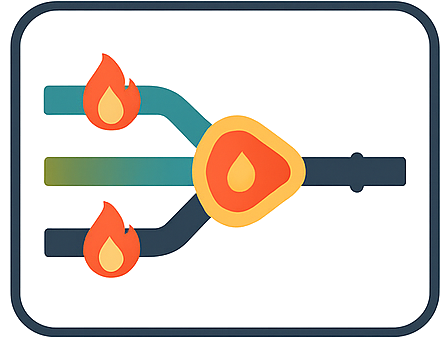
Production Issues & Constant Firefighting

Constant firefighting and unclear prioritization push teams into reactive mode and disrupt planned work. Explore how structured incident management restores SDLC predictability and team focus.
When teams spend more time reacting to outages and defects than building new capabilities, the organization loses momentum. Frequent emergencies are often symptoms of deeper gaps in monitoring, testing, or process discipline. By creating stability—through automation, better visibility, and stronger quality practices—teams can reclaim their time, reduce stress, and focus on advancing the product instead of putting out fires.

Production Issues & Constant Firefighting

Constant firefighting and unclear prioritization push teams into reactive mode and disrupt planned work. Explore how structured incident management restores SDLC predictability and team focus.

Read more...

Slow or Fragile CI/CD Pipelines

Unreliable CI/CD pipelines lead to broken builds, stalled releases, and late-night fixes. See how stabilizing your deployment pipeline eliminates major SDLC bottlenecks and boosts release confidence.
A sluggish or unreliable delivery pipeline turns every release into a gamble. Builds take too long, deployments break unexpectedly, and teams lose confidence in their ability to ship. A strong CI/CD foundation accelerates delivery while reducing risk. Improving pipelines helps teams move quickly, integrate changes more often, and release with predictability—unlocking a healthier, more iterative development rhythm.

Slow or Fragile CI/CD Pipelines

Unreliable CI/CD pipelines lead to broken builds, stalled releases, and late-night fixes. See how stabilizing your deployment pipeline eliminates major SDLC bottlenecks and boosts release confidence.

Read more...

Inefficient Handoffs & Siloed Workflows

Siloed teams and rigid handoffs create hidden delays that stall software delivery. Discover how improving cross-team alignment removes SDLC bottlenecks and accelerates end-to-end flow.
When work moves through too many disconnected roles or teams, important details get lost and progress stalls. Siloed workflows create bottlenecks, duplicate effort, and frustration as teams wait on each other without clear ownership. Improving handoffs means clarifying responsibilities, reducing unnecessary steps, and ensuring everyone has the context needed to keep work flowing. Healthy collaboration makes the entire lifecycle more predictable and efficient.

Inefficient Handoffs & Siloed Workflows

Siloed teams and rigid handoffs create hidden delays that stall software delivery. Discover how improving cross-team alignment removes SDLC bottlenecks and accelerates end-to-end flow.

Read more...

Unclear or Unstable Requirements

Unclear or shifting requirements create rework, slow delivery, and misalignment across teams. Learn how tightening requirement clarity improves SDLC flow and reduces costly bottlenecks.
When requirements shift frequently or lack clarity, teams waste effort trying to interpret what stakeholders really want. This leads to rework, missed expectations, and a sense that progress isn’t tied to real customer needs. Clear, stable requirements create alignment. They help teams plan confidently, deliver value sooner, and reduce churn caused by guesswork. Strong discovery practices ensure that what gets built truly matters.

Unclear or Unstable Requirements

Unclear or shifting requirements create rework, slow delivery, and misalignment across teams. Learn how tightening requirement clarity improves SDLC flow and reduces costly bottlenecks.

Read more...